
Variations on Absence
Marie Obegi
Marie Obegi is a figurative painter born in France to Lebanese parents, whose practice moves between inherited memory, diasporic identity, and the image that survives across generations. Her series Variations on Absence begins with a photograph of her late uncle, a man she grew up seeing but never knowing, and opens into a wider inquiry: how we carry people and places that remain beyond reach, and how those absences shape who we are.
The work is grounded in the philosophy of ambiguous loss, a form of grief without clear resolution, where the subject is present in memory but irrecoverable in life.
Forthcoming exhibition at Galerie Janine Rubeiz, Beirut, January 2027.
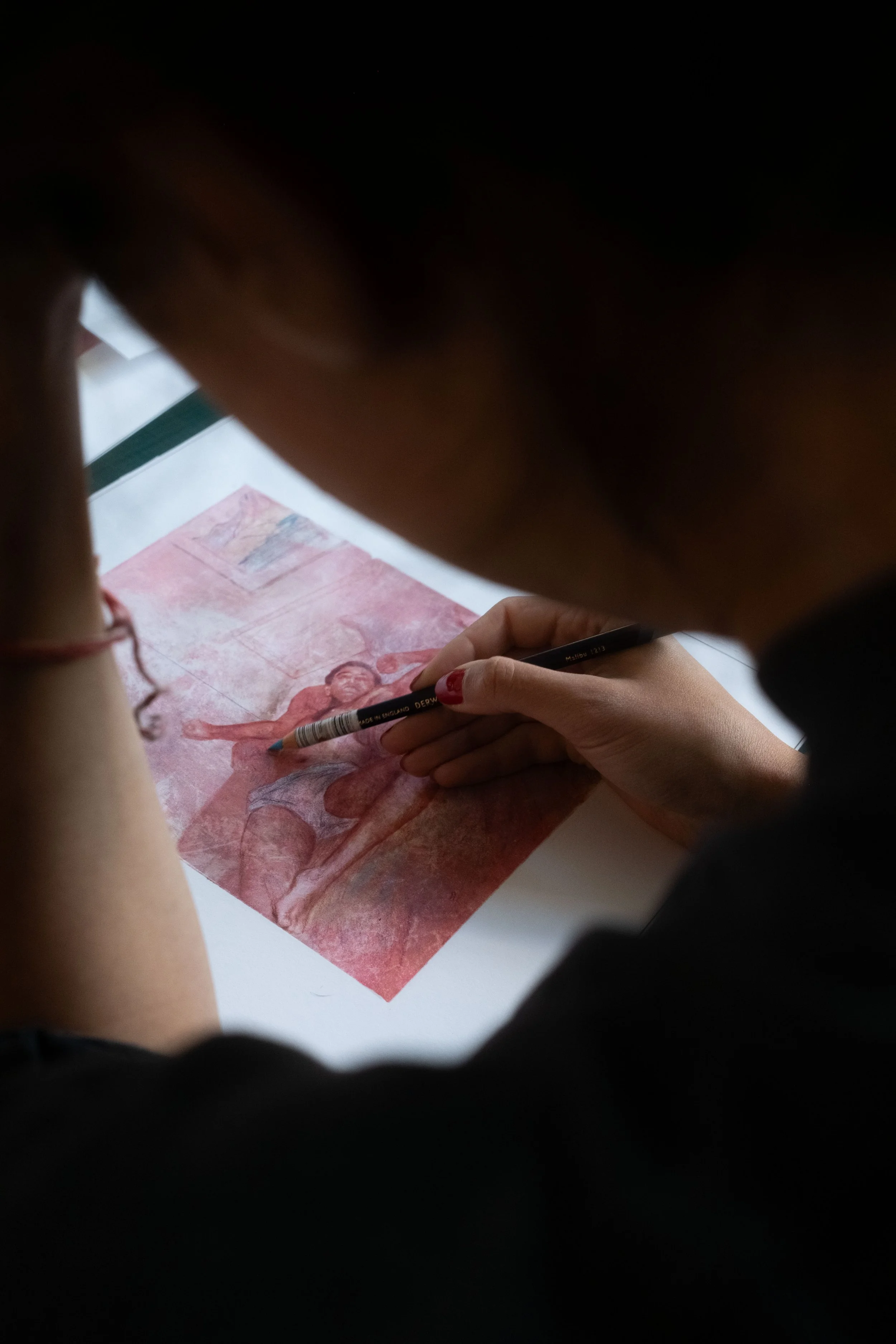
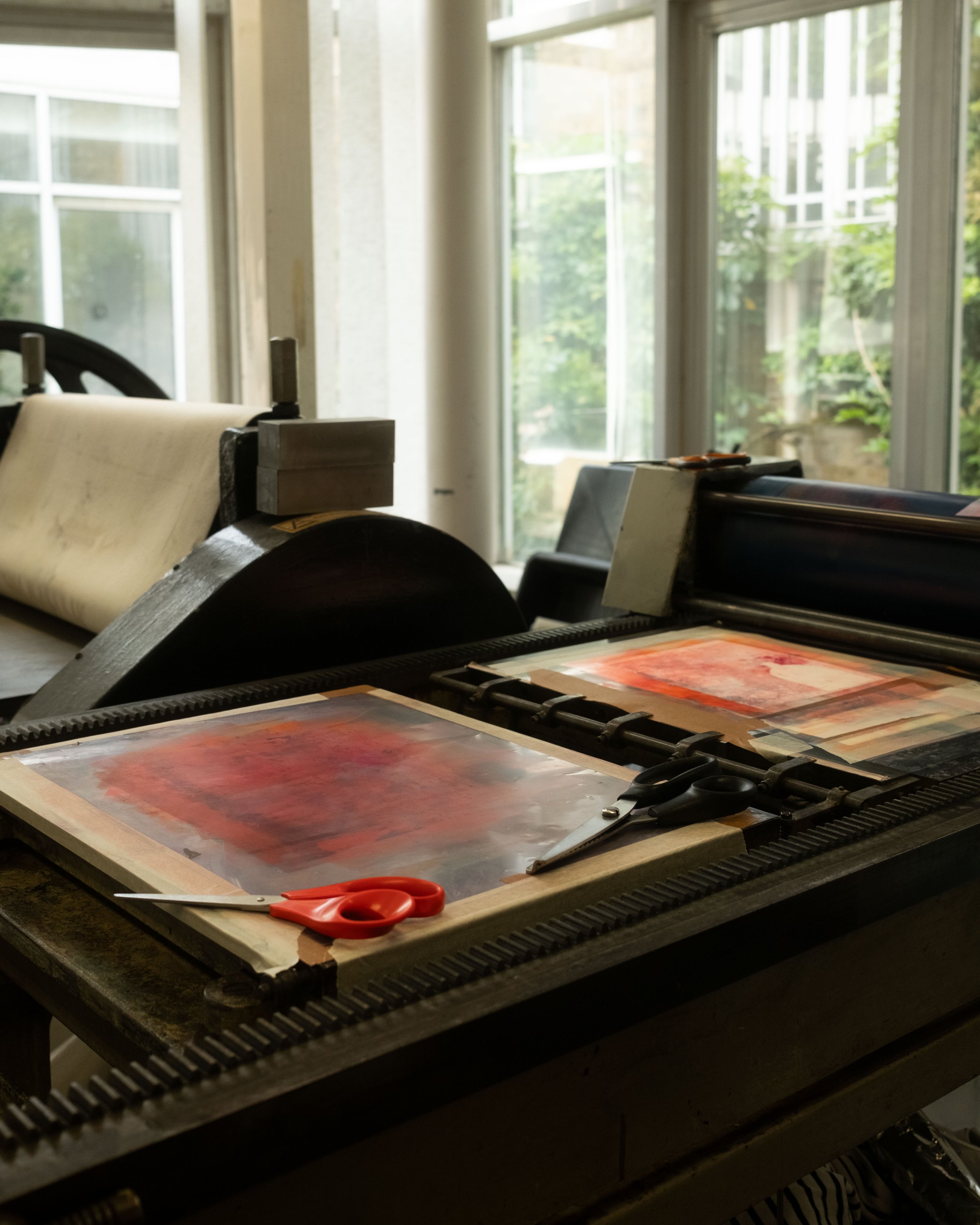
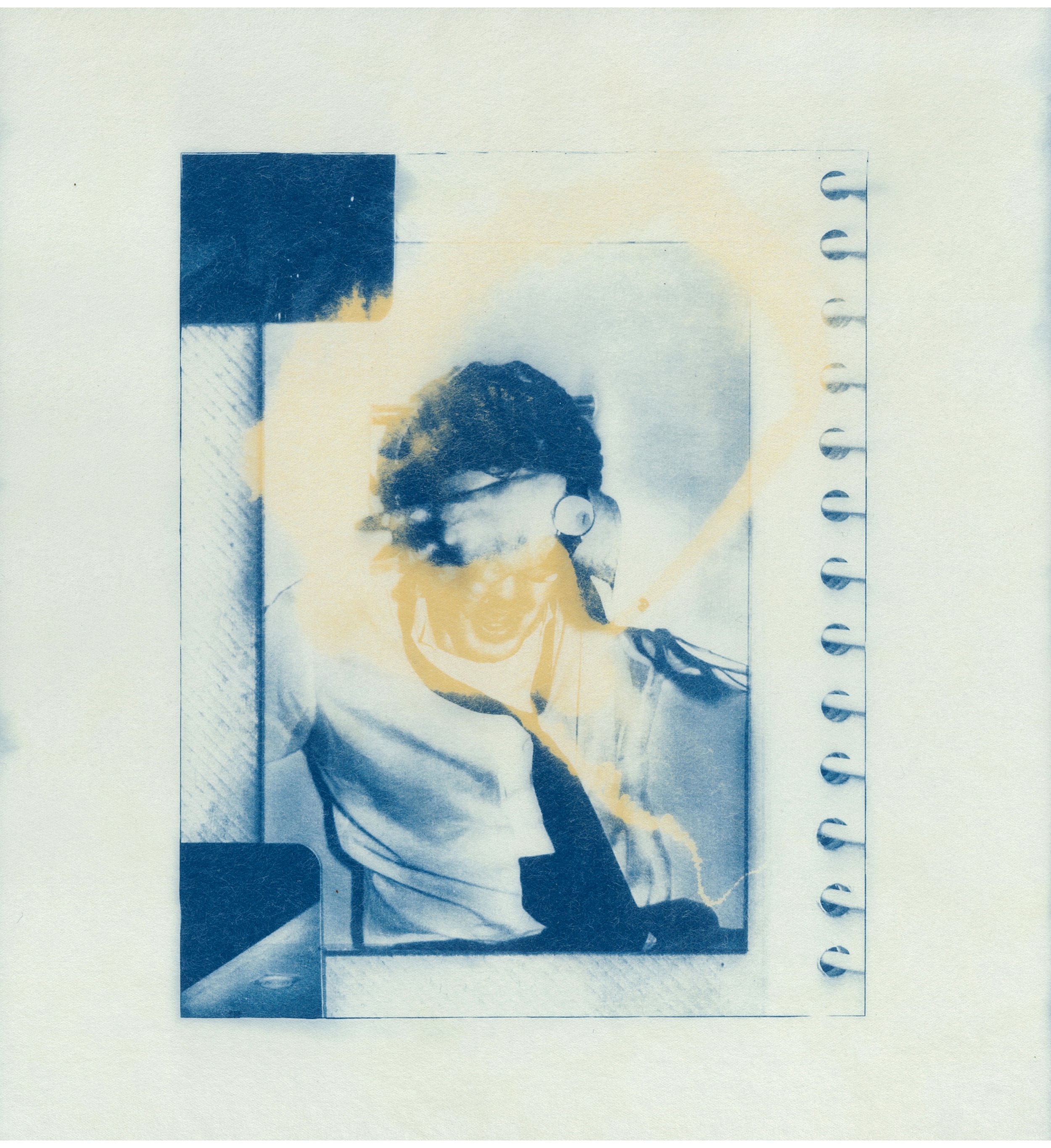
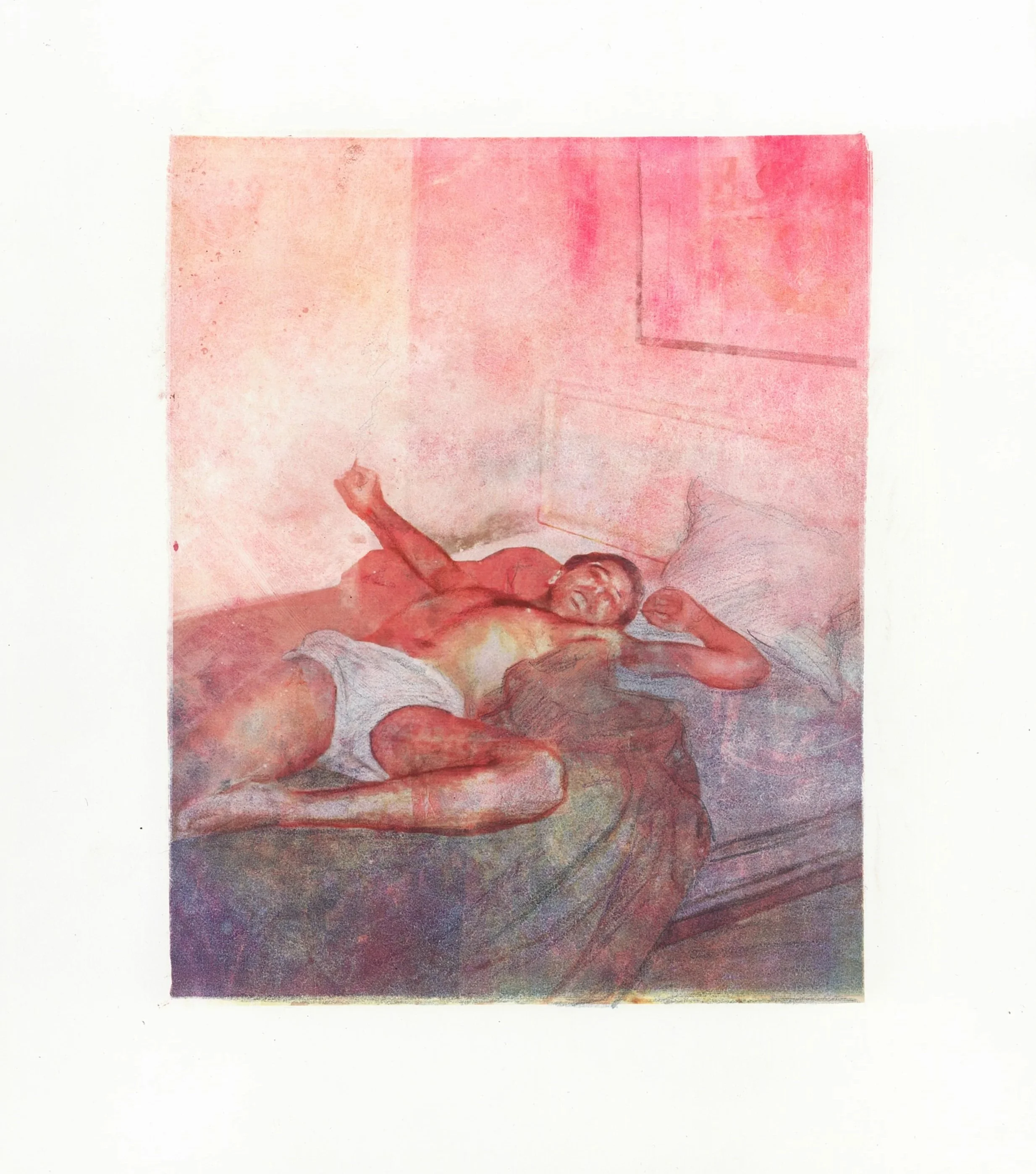
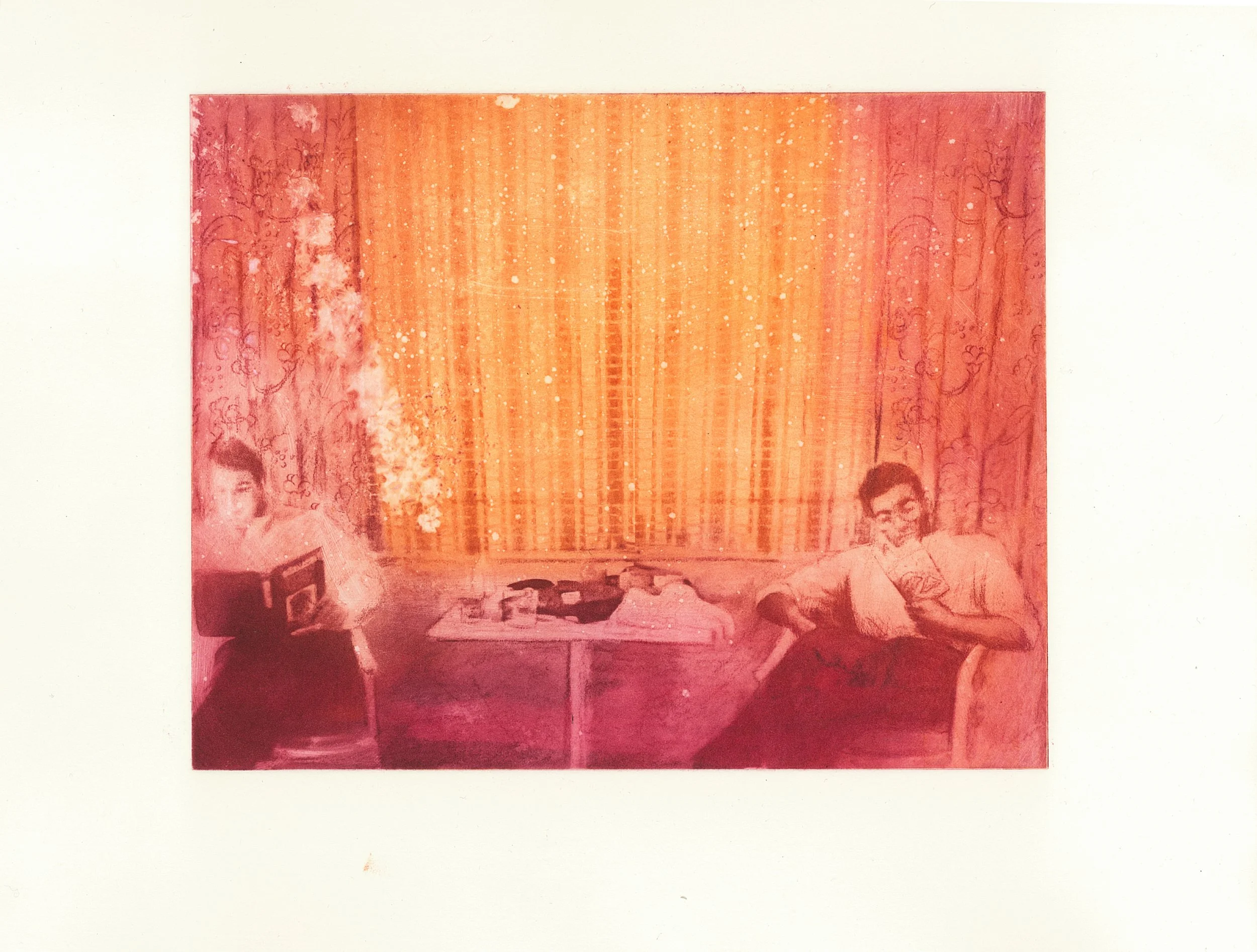
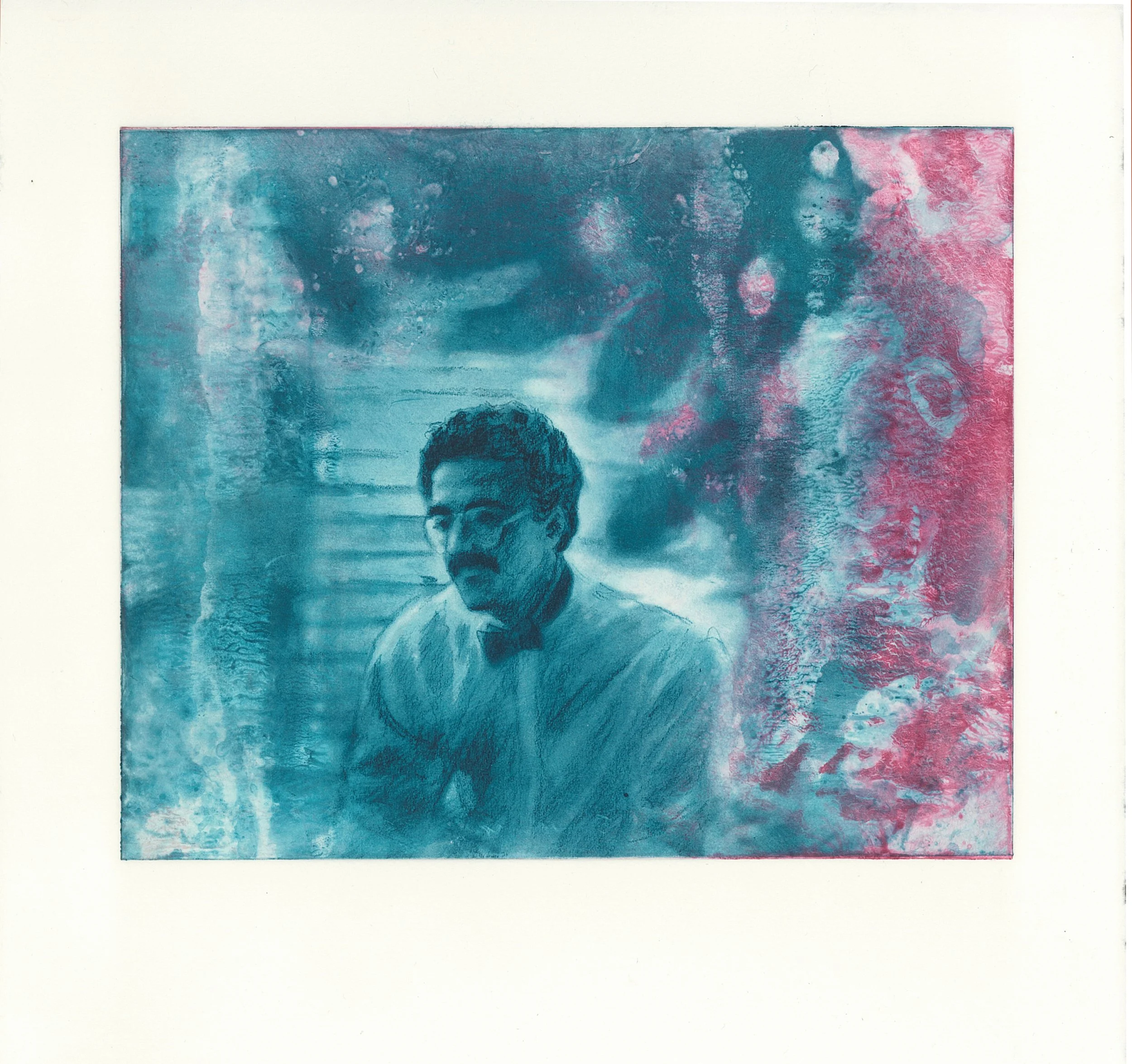
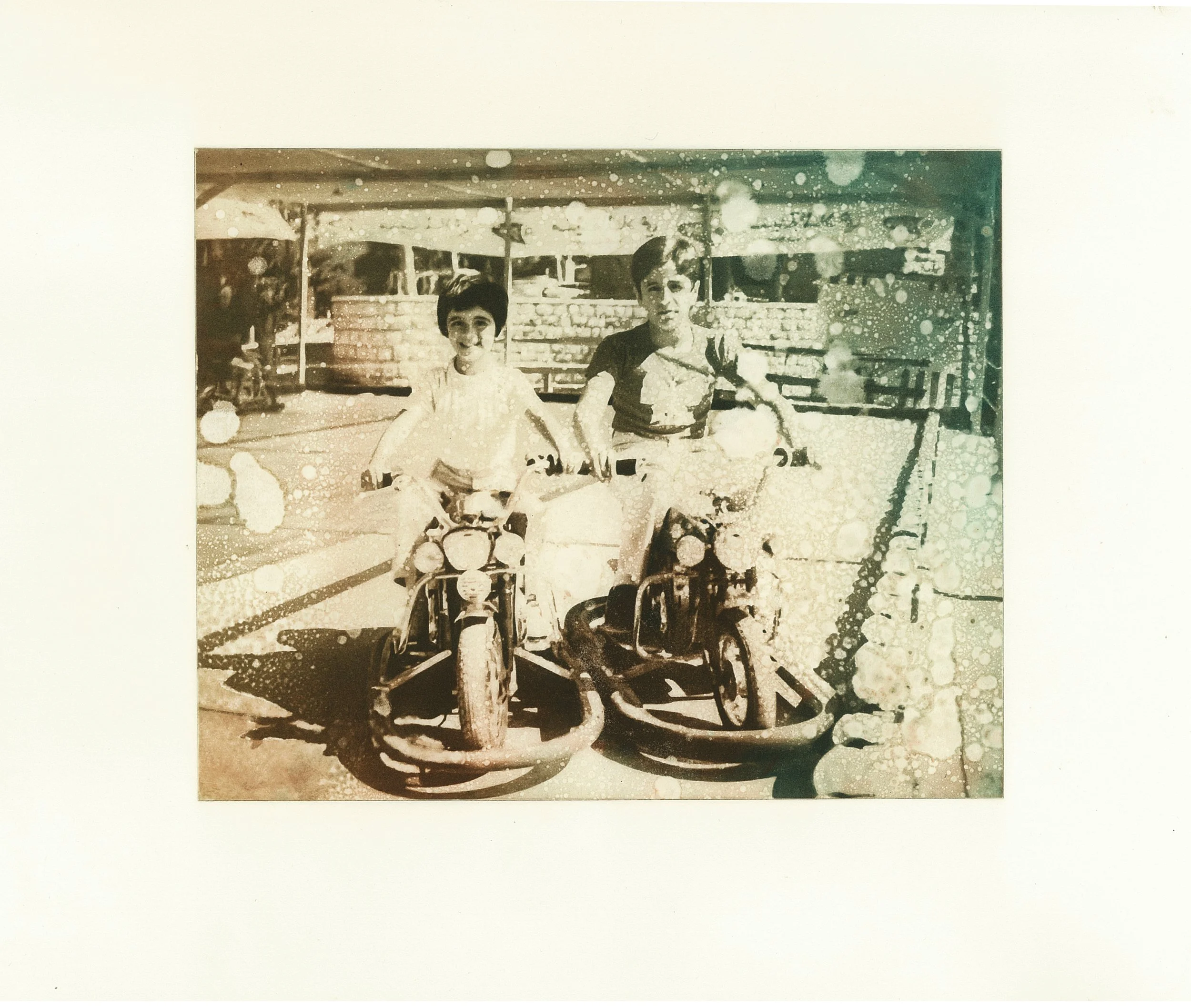
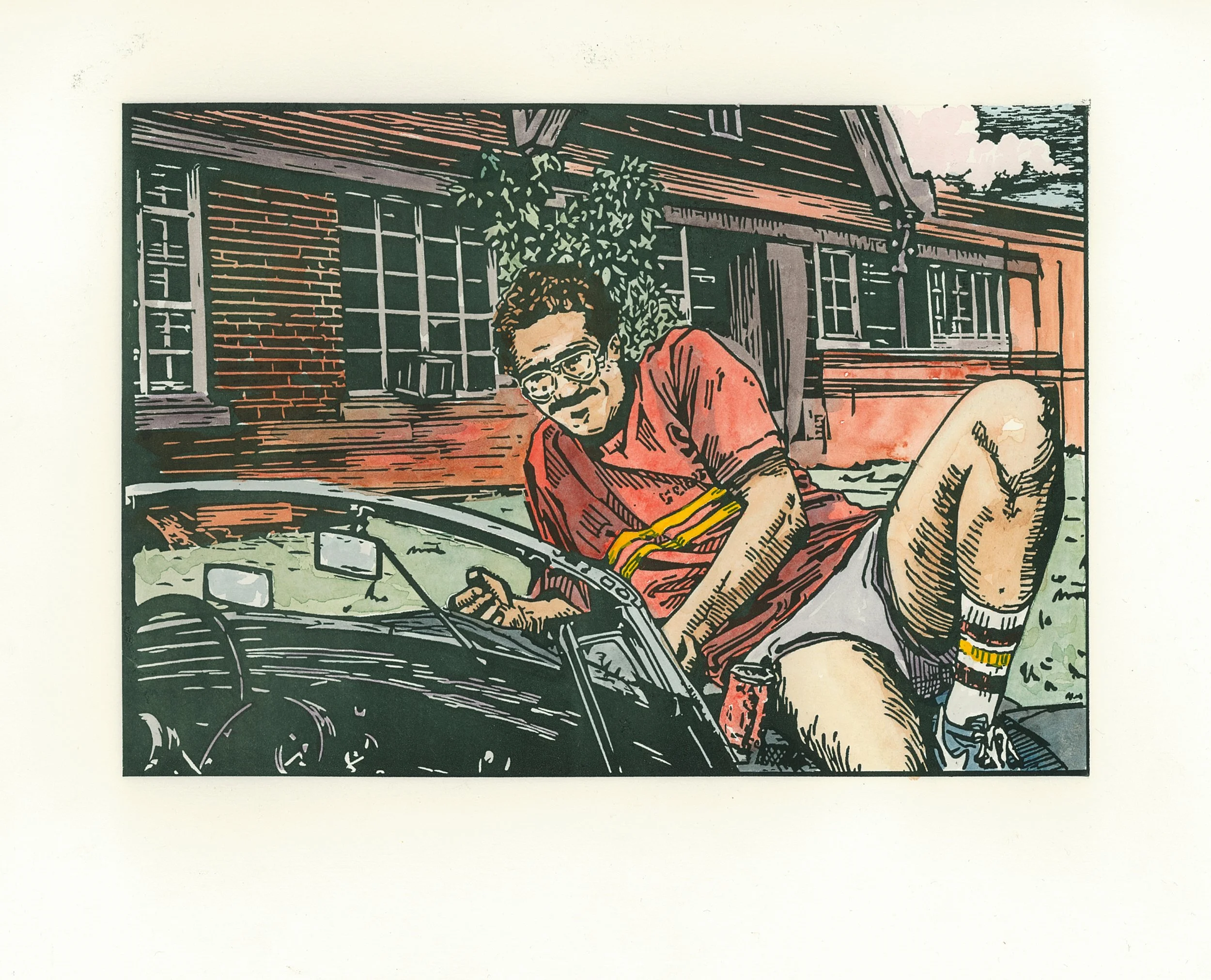
Over her residency at Plaintiff Press, Obegi completed six variable editions of six. Rather than working within print’s conventional logic of exact replication, she used the medium as a foundation: a base image held constant across the set while colour shifted and accumulated through each work, making every edition subtly distinct.
The variations are not decorative. They enact the series’ central concern: that no two encounters with a photograph produce the same memory, and no two people carry an absence in quite the same way.
Painters bring something particular to a print studio. Their instinct for layering, for the way a surface accumulates meaning through successive decisions, presses against the constraints of the medium in ways that take the work somewhere unexpected. These editions are among the more quietly radical things we have made here.
In Conversation with Marie
Variations on Absence begins with a specific image. Can you describe that starting point?
It actually started with a box of photographs I found, they were of my uncle. He passed a couple of years before I was born and I didn’t get to know him, but I grew up with his image in the house. I began painting him as a way of sitting with something, a memory that wasn’t mine, a relationship I inherited without ever having. He became a way in to something larger. A grief for a stranger that is also a family member, or rather, a family member that is also a stranger.
Your own biography runs through the work. How does that function?
I was born in France to Lebanese parents. Lebanon is central to my identity, but what I carry of it came through family stories, loss, migration, departure. As an adult I returned, but the feeling of displacement didn’t leave. There is a term, phantom homeland, for a place that exists more in longing than in geography. My uncle came to represent that condition in full.
How did working in print change or extend the series?
Print offered a logic I wanted to work with for this series. I loved the medium and had explored quite a lot of different techniques in the past, but never anything using photo-etchings. It felt perfect for this project, although I knew I would need quite a lot of guidance and the studio provided everything and more! I was curious to play with the idea that an image repeats, only each time with subtley changing colours, tones, and layers. What I wanted was to hold the image and let it shift, the way memory holds something constant in outline and changes it in feeling each time you return to it. The colour variations across the editions came from that. Each one is the same encounter, and not the same.
Tell us about where the idea for the six variations of six came from.
I had been working on Variations on Absence and wanted to use the medium of print to repeat, but differently each time. The result is 36 Views on Absence: six etchings, each printed in an edition of six, with every impression unique.
The title nods to Hokusai’s Thirty-six Views of Mount Fuji. I spent two years in Japan studying Moku-hanga, Japanese wood carving, and his series was one of the reasons I went. The same mountain appears in every print. Sometimes it fills the frame, sometimes it is barely a mark in the distance, but it is always there.
That logic felt true to this work. My uncle is in every painting in Variations on Absence, the same photograph, the same face, returned to again and again. Print gave me a way to extend that. Not six different images, but the same image encountered six times, changed by what accumulates in the colour, the pressure, the making. Thirty-six works that are, in some sense, one.
6 Variable Editions of 6
Produced at Plaintiff Press
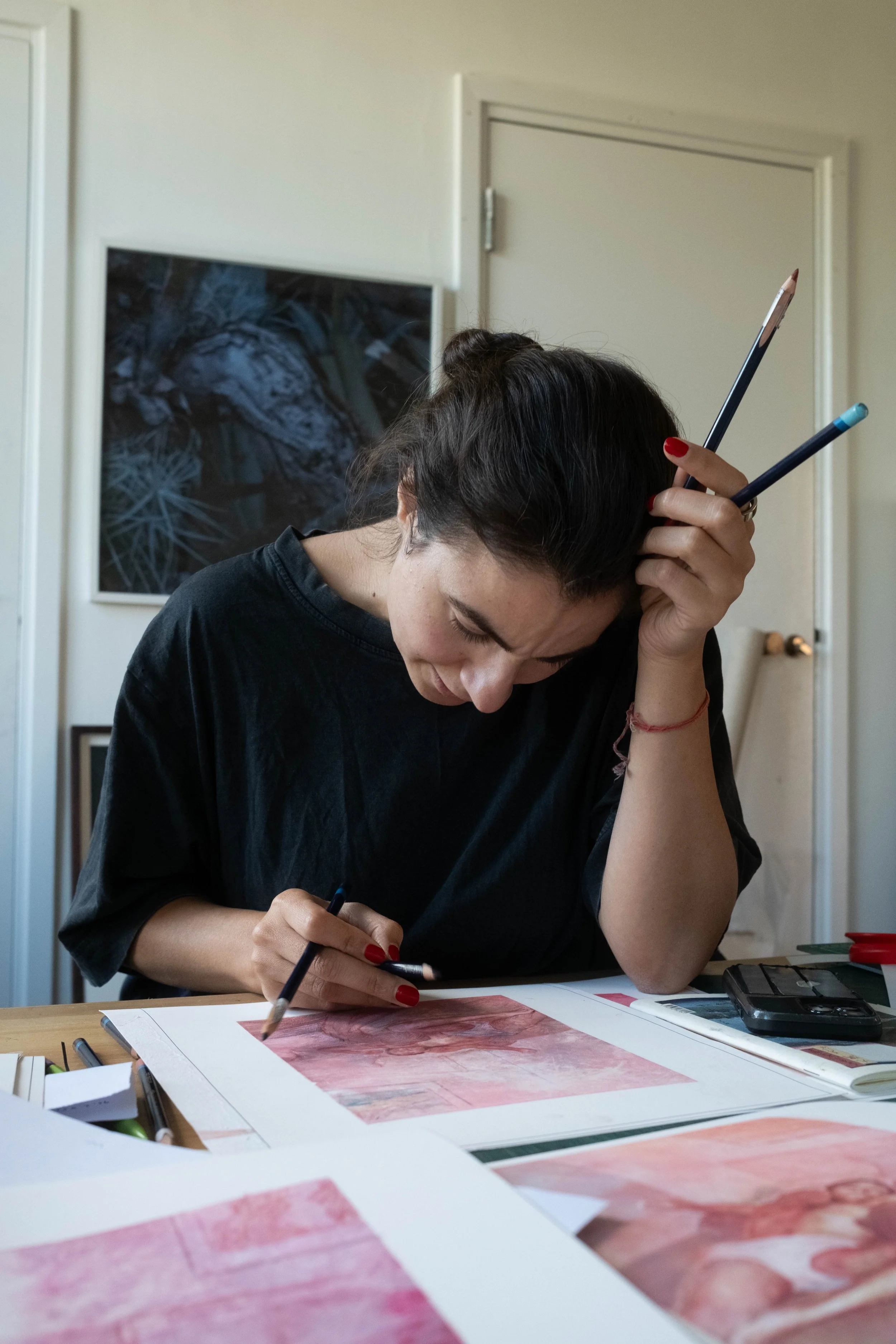
Marie Obegi
Artist
Influenced by psychology, literature, and philosophy, Obegi’s practice explores rhythmic series where form is built from suggesting memory, experience and emotion as much as it is from the figure itself. Her interest lies in what is concealed as much as what is revealed, and in how intimacy functions as a visual and conceptual structure, building a narrative across each body of work that invites her audience into the elaborate plot lines she creates.
Obegi is the founder and director of Maison Pan, an artist-run space operating in London, Paris, and Beirut, where she curates exhibitions and leads a residency programme supporting emerging and established artists. In 2025, she organised Art for Lebanon, an international auction raising over $92,000 for NGOs working in Lebanon.
Her work has been exhibited internationally, in Paris, Beirut, New-York, including at Chapelle XIV (Paris), Guts gallery, Unit 1 Gallery (London), and art fairs in Barcelona and Beirut.